Sport
How the African Diaspora Rewrote the 2026 World Cup
The 2026 FIFA World Cup has revealed itself not just as a contest between nations, but as a living map of global migration, identity, and belonging.
Before a football match kicks off, the stadium falls silent, and the anthems rise as the players stand shoulder to shoulder, creating a momentary illusion of the modern nation-state. Eleven players, one anthem, and one flag. However, beyond the embroidery on the shirts and the borders begin to dissolve. The 2026 FIFA World Cup has revealed itself not just as a contest between nations, but as a living map of global migration, identity, and belonging.
For Vantage, a publication dedicated to documenting the sophistication, ambition, and global influence of African communities, this World Cup has become a profound reflection. It reveals the essence of belonging to multiple places simultaneously and how the diaspora is reshaping the world's most powerful cultural force, football.
Europe's Powerhouses, Africa's Pulse
Step into the dressing rooms of Europe's elite football nations, and the African influence is palpable. France, England, Belgium, and the Netherlands are not merely adorned with African heritage; their footballing identities are intricately woven into it.
Consider Michael Olise, for instance. Born in London to a Nigerian father and a French-Algerian mother, he trained in English academies before dazzling the world in the blue of France. His eligibility alone paints a vivid picture of a diaspora journey. Similarly, Bukayo Saka, the son of Nigerian immigrants raised in West London, has become one of England's most cherished footballers. Even across the Atlantic, Folarin Balogun, born in New York and raised in London with Nigerian parents, embodies the fluidity of modern identity.
These players are not anomalies. They are the norm in cities like London, Paris, Brussels, and Amsterdam, where second- and third-generation immigrants navigate layered identities daily. For decades, commentators framed this as a “brain drain,” a loss for the African continent. But that thinking belongs to another era.
What we are witnessing today is not loss — it is a global talent empire. African heritage is not just participating in European football; it is defining its rhythm, its swagger, its creativity. These players prove that you do not need to erase where you come from to excel where you are.
Cape Verde and the Rotterdam Blueprint
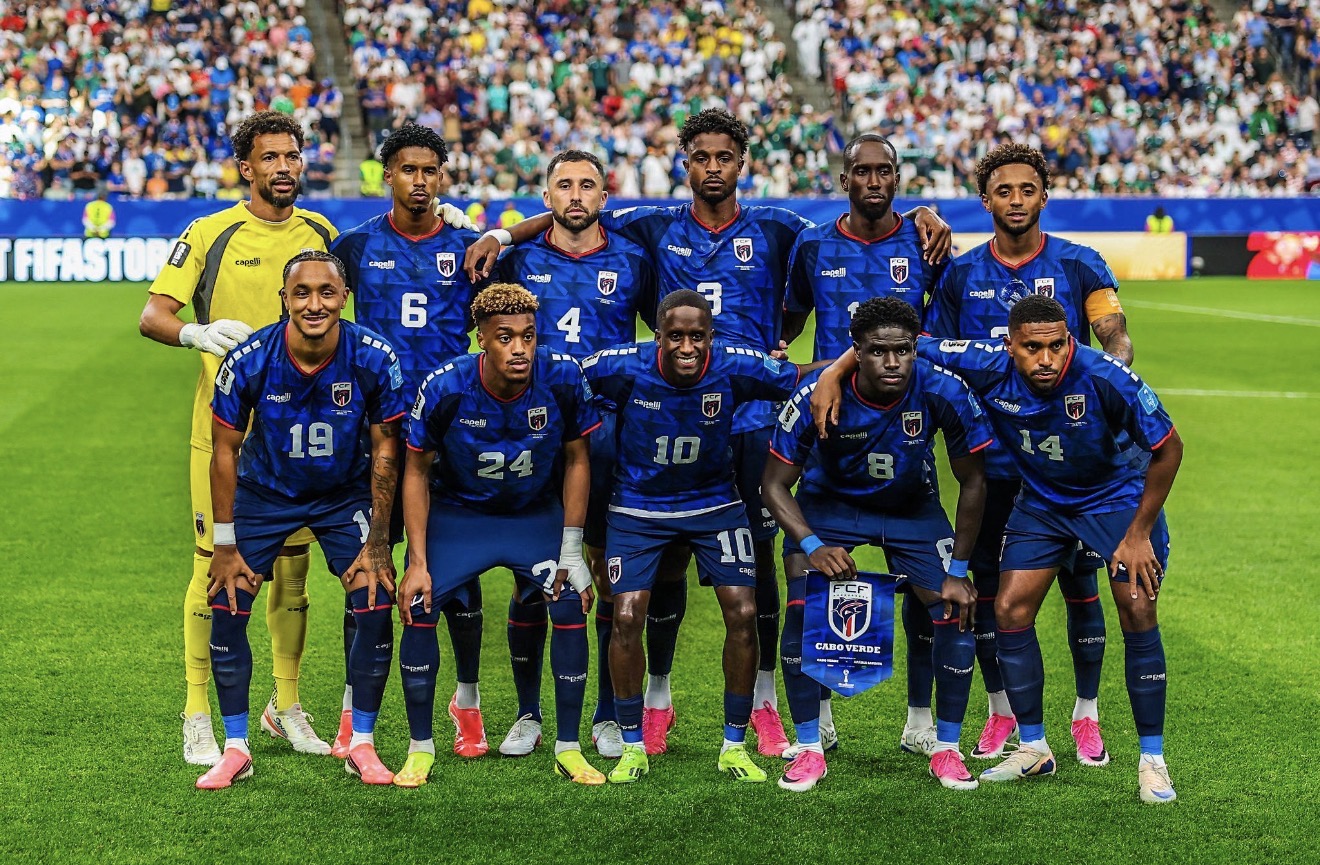
While Europe draws strength from its African roots, an intriguing reverse trend is emerging. Cape Verde, the undisputed fairytale of this World Cup, exemplifies this phenomenon.
Despite having a population smaller than a London borough, Cape Verde astounded the world by advancing to the Round of 32, even holding formidable opponents like Spain and Uruguay in its group stage. This remarkable feat raises the question: how does a nation of just over half a million compete on football's grandest stage?
The answer lies in the influence of the Cape Verdean diaspora. Cape Verde's football federation executed one of the most strategic, forward-thinking diaspora recruitment projects in modern football. More than half the squad was born outside the islands, many in the industrial port cities of the Netherlands, especially Rotterdam, home to one of the largest Cape Verdean communities in Europe.
Players like Dailon Livramento, who was born and raised in Europe, made a deeply personal decision to represent the land of their parents and grandparents. For them, the choice wasn't about geography but identity, belonging, and legacy.
“African excellence — whether expressed in the blue of France, the three lions of England, or the green of Senegal — has become the dominant currency of this World Cup. The diaspora is not a footnote. It is the storyline.”
Cape Verde didn't view its diaspora as a historical tragedy of displacement. Instead, it saw a global network of elite human capital and built a system to bring that talent back home. In doing so, it provided a blueprint for how small nations can leverage their global communities to disrupt football's hierarchy. This isn't just about sport. It's strategic community enterprise.
The Myth of Singular Identity
The deeper story of this World Cup is the collapse of the myth of singular identity. The modern diaspora kid does not fit neatly into one box. You can be British in accent, Dutch in tactical education, and unshakeably African in spirit.
The knockout rounds showcased this beautifully. Cape Verde, Morocco, and DR Congo leaned heavily on their global sons to scale new heights. Meanwhile, South Africa's Bafana Bafana reached the knockouts with a squad composed entirely of home-born, domestically developed players. Both paths are valid. Both reflect the continent's depth, diversity, and strategic range.
A historic nine African nations advanced to the Round of 32. But the true victory extends far beyond those nine flags. African excellence — whether expressed in the blue of France, the three lions of England, or the green of Senegal — has become the dominant currency of this World Cup. The diaspora is not a footnote. It is the storyline.
A New Map of Belonging
This World Cup has compelled the world to confront a novel reality: identity transcends borders. The notion that nationality is fixed, singular, or inherited in a linear fashion has been shattered.
Instead, we observe the emergence of fluid identity, shaped by migration, culture, ancestry, and personal choice. Football, with its global reach and emotional resonance, has become the most prominent platform for this transformation.
The diaspora is rewriting the rules of belonging. It is redefining what it means to represent a nation. It is expanding the meaning of home. And in doing so, it is reshaping the world's most beloved sport.
The Diaspora Era Has Arrived
Whether wearing European colours or African ones, diaspora players have become the connective tissue of the modern game. They are the bridge between continents, cultures, and histories. They are proof that identity is not a straight line but a constellation.
The 2026 World Cup has not just been a tournament. It has been a global exhibition of African excellence — fluid, borderless, and unapologetically expansive. The diaspora is not just participating in the beautiful game. It is redefining it on its own terms.
About the author
Victor Ikoli writes long-form features for Vantage on identity, culture and the African diaspora.