People
Beyond the Wrong Guy: Guy Goma’s Journey from Congo to Britain
Twenty years after the BBC mistake that made him famous, Guy Goma is still working, still learning and still helping others. Telling his story took the producer who made that mistake all the way to Congo.
For 20 years, the world has known Guy Goma for one expression: wide eyes, a stunned face, a man who has just realised he is somewhere he shouldn’t be.
He had gone to the BBC on 8 May 2006 for a job interview. Instead, a producer led him into a television studio, and before he could work out what was happening, he was live on BBC News, introduced as the technology journalist Guy Kewney and answering questions about an Apple court case.
The clip went around the world. The life behind it is a much bigger story, one of Congo, migration, starting again and a man who came to Britain and decided to keep learning. It also took the producer who made the mistake, Elliott Gotkine, to Congo.
Goma still remembers arriving at the BBC and doing what any job applicant would do. He sat down and waited.
“I went and sat down on the bench,” he recalls. “I was waiting until they came to call me, ‘Guy.’”
That was when Gotkine appeared.
“When he says ‘they’, he means me,” Gotkine says, laughing.
Gotkine was a BBC producer then. He took Goma upstairs to a small lounge, where a woman offered to put makeup on him. Goma said no. He was there for an interview, after all.
“I didn’t know it was a studio,” he says. “Honestly, I didn’t know. For me, it was just like a waiting area.”
Then the monitors came on, and Goma saw himself on the screens, being introduced as Guy Kewney.
“God, I’m lost,” he remembers thinking.
The next few minutes changed both men’s lives.
After the cameras
Being famous and making money from it are different things. Within the Congolese community, Goma says, people assumed the clip must have made him rich. The video was everywhere, so surely the man in it had been paid handsomely.
It hadn’t. The attention never turned into the kind of reward people imagined, and Goma carried on with his life.
Today he works with a charity supporting people with learning disabilities, and he talks about the job warmly. “I love it,” he says. It doesn’t come across as a consolation prize for lost fame. A man who ended up in front of millions of viewers by accident now spends his working days with people who can struggle to be seen.
Starting again
To understand Goma, you have to go back to before the BBC.
His family lived through civil war in Congo. Their house was burned and most of what they owned was lost. His brother, who was living in Paris, sent a computer home, and that was Goma’s first real contact with technology.
After arriving in Britain he kept studying. He took IT courses, including the European Computer Driving Licence, and worked on his Word and Excel. He had an accounting background and wanted to be able to compete.
“I don’t want to go somewhere and feel lower than others,” he tells me. “I want to always be competitive.”
One memory from his early days in Britain has stayed with him. A woman stopped him in the street and asked him a question. His answer was, “Me no speak English.”
He laughs about it now. At the time it hurt.
“I feel bad,” he says. “I’m somewhere in another country where I cannot express myself. What kind of a man am I?”
English had never seemed important when he was growing up. He had studied in French and assumed his future lay in French-speaking countries. Then he came to England, and he went back to learning.
He says that is how he looks at life now: if an opportunity is there, take it and improve yourself. “The world, the way it’s moving, it’s so fast,” he says. “If you don’t catch up, you’re behind.”
Going to Congo
Gotkine later travelled to Congo, the country Goma had left. A producer who had walked a Congolese job applicant into a BBC studio by mistake went to see where that man came from.
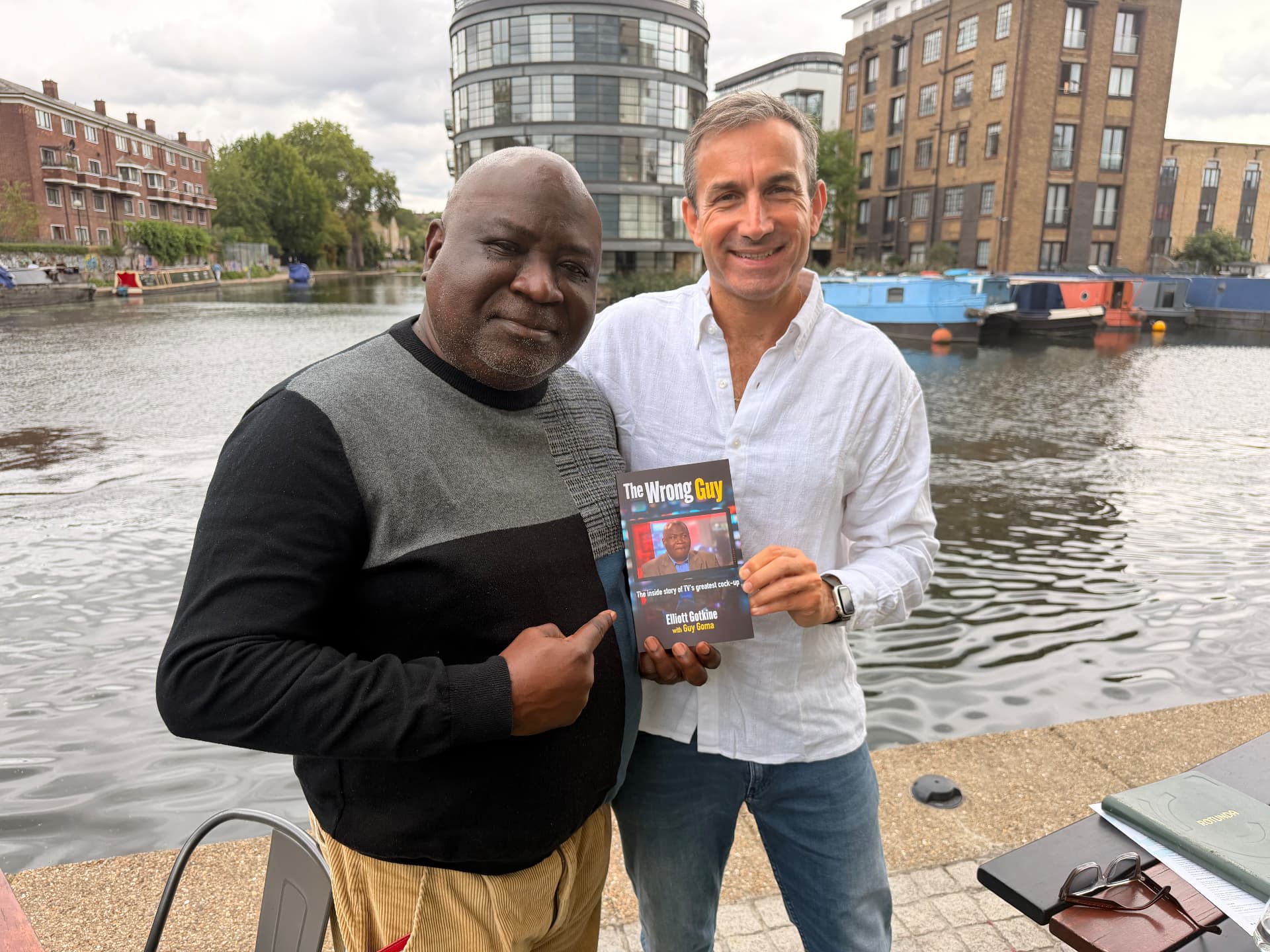
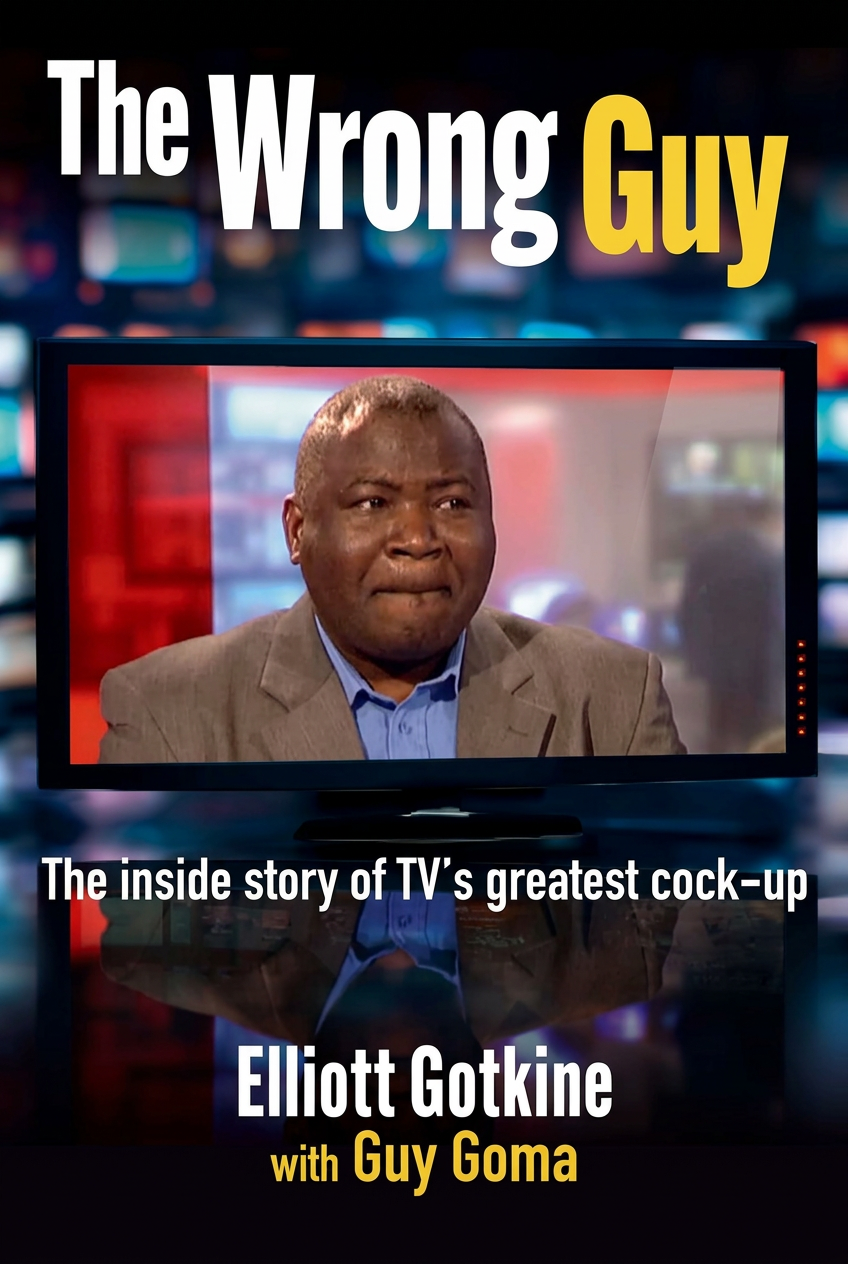
What began as a blunder became an unlikely friendship, and the two men have now told the story together. The Wrong Guy: The Inside Story of TV’s Greatest Cock-up was published in April. Gotkine, an Emmy-winning journalist, wrote it in collaboration with Goma. It goes back to that day in 2006, looks at what happened behind the scenes, and follows Goma’s life after the fame.
The man behind the clip
Goma’s story also speaks to the African diaspora experience. A migrant can arrive in Britain with qualifications and ambitions, only to find that starting again takes patience. Sometimes that means a new language, sometimes retraining, sometimes a job with little to do with the career you had in mind. And sometimes, as with Goma, it means becoming famous for something you never meant to do.
The risk is that people remember only the extraordinary moment. Goma wants them to see the person: not the shocked face on BBC News, not the wrong guy, but the man who came to Britain and kept trying.
At the end of our conversation, I asked him what he wanted people to remember about him. His answer was the simplest of the interview.
“The man who came to the UK and tried to improve himself.”
Twenty years on, that answer carries more weight than the viral clip. His story was never really about being mistaken for someone else. It is about what happened once the cameras stopped: leaving Congo, rebuilding in Britain, learning a language and new skills, and finding satisfaction in a life that didn’t go to plan.
The world saw a man who didn’t know what was happening. It didn’t see a man who knew exactly what he wanted to do next: keep learning, keep improving and keep moving forward.
Twenty years later, Guy Goma is still doing exactly that.
You’ve seen the video. Now discover the story behind the mistake that made Guy Goma famous.
The Wrong Guy: The Inside Story of TV’s Greatest Cock-up, by Elliott Gotkine in collaboration with Guy Goma, is published by Liberalis Books, an imprint of Collective Ink. It was published on 28 April 2026, runs to 200 pages and is out now in paperback, e-book and audiobook.
About the author
Victor Ikoli is the Founder and Editor-in-Chief of Vantage Magazine.